About the Mandir
A living centre of devotion in Rampura, rooted in the teachings of Bhagwan Shree Swaminarayan and the unbroken tradition of the Sampraday.
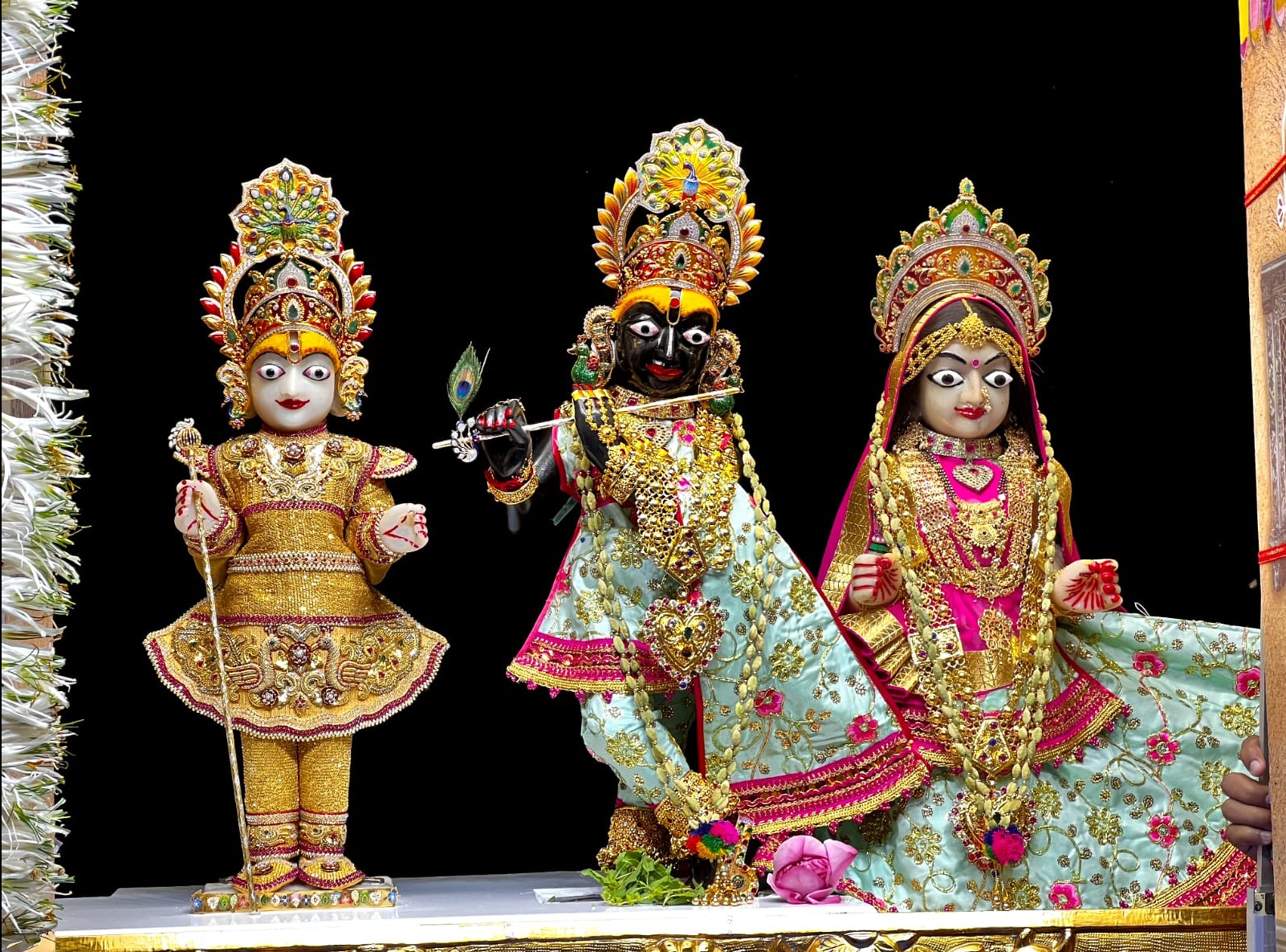
Shree Swaminarayan Mandir, Rampura
Our mandir exists for one purpose — to keep the darshan of Thakorji available to everyone who seeks it. The doors open before sunrise for mangla aarti and close only after shayan aarti at night.
The Satsang here is an ordinary community doing an extraordinary thing together — keeping a 200-year-old tradition alive in daily practice rather than in memory.
મંદિરનો ઇતિહાસ — Shri Narayanmunidev & Shri Radhavihari Dev, Surat
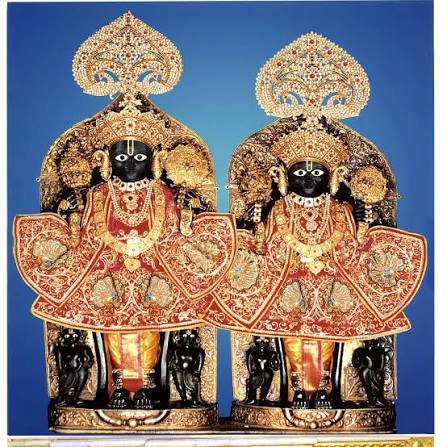
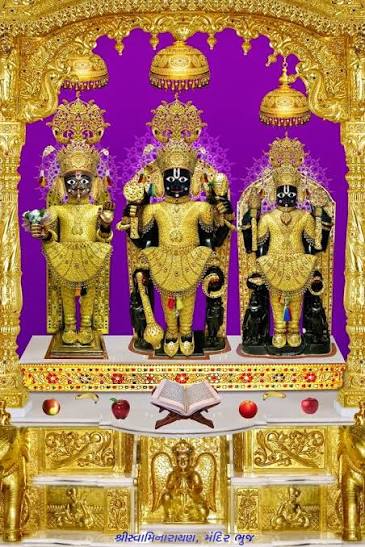
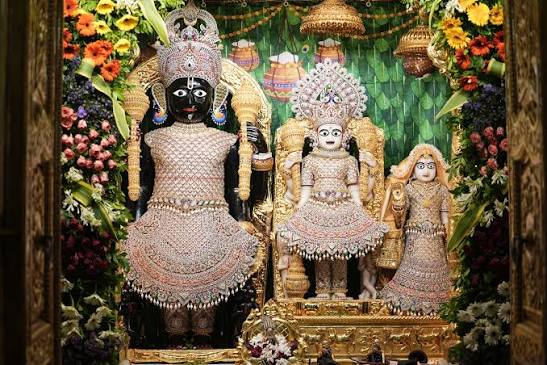
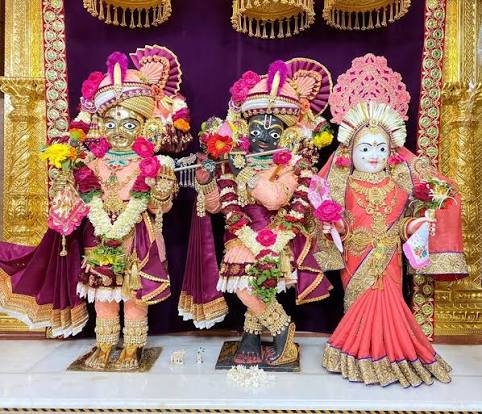
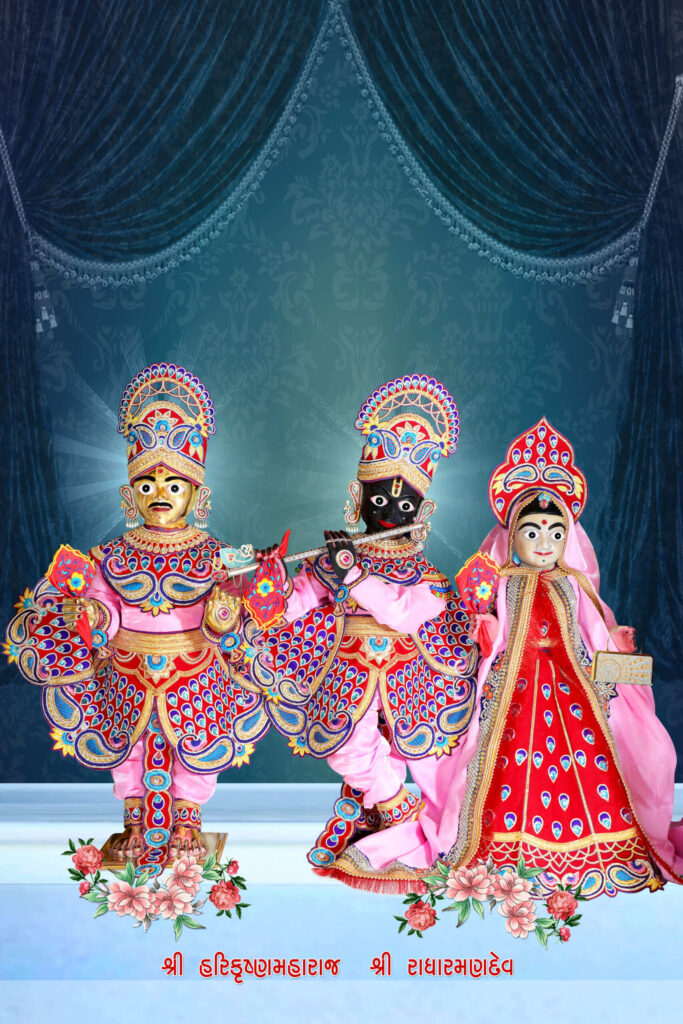
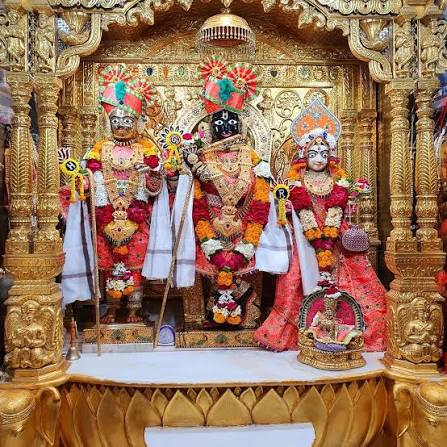
Our mandir stands in Rampura, in the heart of old Surat — the city known in the shastras as Suryapur — on the northern bank of the river Tapi. Its presiding deities are Shri Narayanmunidev and Shri Radhavihari Dev, worshipped here as the ever‑accessible archavatar of Purushottam Bhagwan.
The murti‑pratishtha of Shri Narayanmunidev and Shri Radhavihari Dev was performed on Vaishakh Sud 5, Samvat 1892 (1836 CE). A full century later, on Vaishakh Sud 5, Samvat 1992 (1936 CE), the Satsang of Surat kept the grand centenary — the Shat Samvatsarik Sansthapanotsav — with historic celebration.
To mark that centenary, a commemorative history — “Suratvasi Shri Narayanmunidev tatha Shri Radhavihari Dev — Shat Varshik Pratishthotsav no Itihas” — was compiled by Shastri Harijivandasji, published by the Surat Satsangi Samaj by the order of Acharya Shri Gyanandprasadji Maharaj (Samvat 1993 / 1937 CE). The account of the mandir on this page is drawn from that record.
Shri Narayanmunidev & Shri Radhavihari Dev
Rampura, Surat — on the bank of the Tapi
Vaishakh Sud 5, Samvat 1892 (1836 CE)
Samvat 1992 (1936 CE)
Born Ghanshyam, known as Nilkanth Varni, revered as Sahajanand Swami. (1781–1830)
Manifestation at Chhapaiya
Ghanshyam Pande was born to Dharmadev and Bhaktimata in Chhapaiya, Uttar Pradesh, on Chaitra Sud 9 — the day of Ram Navmi.
The Van Vicharan begins
After the passing of his parents, he left home as the child-yogi Nilkanth Varni and walked some 12,000 km across India over seven years.
Meeting Ramanand Swami
Nilkanth Varni arrived at Loj in Gujarat and joined the fellowship of Ramanand Swami, who initiated him as Sahajanand Swami in 1800.
Accepting the leadership
Ramanand Swami entrusted the entire Sampraday to Sahajanand Swami. At Faneni, he gave the Swaminarayan mantra.
The Shikshapatri & the Acharya seats
He wrote the Shikshapatri in 212 shlokas, and established the two Gadis of Ahmedabad and Vadtal.
Return to Akshardham
Bhagwan Shree Swaminarayan departed from Gadhpur on Jeth Sud 10, leaving behind a fellowship of hundreds of thousands and six grand mandirs.
Within his own lifetime, Bhagwan Shree Swaminarayan built six grand mandirs across Gujarat — each still a place of daily worship today.
Shikshapatri
The epistle of 212 shlokas prescribing the code of conduct for every satsangi.
Vachanamrut
273 spiritual discourses delivered by Shreeji Maharaj and recorded verbatim by his senior paramhansas.
Satsangijivan
The authoritative Sanskrit scripture by Shatanand Swami narrating the life and teachings of Shreeji Maharaj.
Bhaktachintamani
Nishkulanand Swami's devotional epic in Gujarati verse, recounting the life and leelas of Bhagwan Shree Swaminarayan.
Seva
Selfless service offered without expectation — in the kitchen, the garden, the sabha or the shoe stand.
Ahimsa
Non-violence in thought, word and deed. The mandir kitchen is strictly satvik and vegetarian.
Sanskar
Passing on values to the next generation through bal and yuva sabhas, kirtan classes and festival participation.
Samp
Unity and harmony within the Satsang — the fellowship is strongest when it moves together.
Come and take darshan
Whether it is your first visit or your thousandth, the doors of Thakorji are open to you. Padharo.